


IPL Skin Rejuvenation Treatment Norwich
For dull, uneven, sun-damaged skin and early visible signs of photoageing
Skin ageing is rarely just one thing.
You may notice that your skin looks duller than it used to, the colour is less even, small areas of pigmentation have appeared, redness is becoming more noticeable, pores look more obvious or the skin simply does not have the same clarity and freshness it once did.
Often, several of these changes are happening at the same time.
That is where IPL skin rejuvenation can be particularly useful.
At Alison Mary Aesthetics in Taverham, Norwich, I use DPL, a more selectively filtered form of IPL, to treat some of the visible changes associated with sun exposure and early skin ageing.
Unlike an ablative treatment such as CO₂ laser, IPL does not remove or resurface the surface of the skin.
Instead, filtered pulses of light are delivered into the skin where different wavelengths can interact with targets such as melanin within pigmentation and haemoglobin within superficial blood vessels.
Controlled heating within the skin may also contribute to gradual dermal remodelling over time.
The result is a treatment aimed less at one isolated mark and more at improving the overall appearance of colour, clarity and skin quality.

At A Glance
-
Treatment: DPL / IPL Skin Rejuvenation Treatment
-
Used for: Dull or uneven skin tone, mild sun damage, mixed superficial redness and pigmentation, early visible photoageing and general skin-quality improvement
-
Price: from £132
-
Treatment time: Approx 30 to 60 minutes depending on the area
-
Downtime: Usually mild temporary redness or warmth. Existing pigmentation may temporarily become darker before fading
-
Treatment plan: Often more than one treatment, depending on the skin and what you are trying to improve
-
Clinic: Taverham, Norwich, NR8
-
Parking: Free private on-site parking
What Are You Actually Trying To Improve?
“Skin rejuvenation” is a very broad term.
It can mean completely different things to different people, which is why I do not think a generic rejuvenation setting should automatically be used for everyone.
These are some of the concerns I commonly mean when I talk about DPL skin rejuvenation.
My skin just looks dull or tired
Sometimes there is no single obvious problem.
The skin simply looks less clear, bright and even than it used to.
Years of UV exposure can gradually create small areas of pigment, subtle vascular colour and general irregularity that collectively make the complexion look duller.
DPL can be used across the treatment area to improve that overall mixture of colour rather than chasing one individual mark.
I have a mixture of redness AND brown pigmentation
This is extremely common.
Photoaged skin may contain superficial pigmentation alongside background redness, small capillaries and uneven tone.
This is one of the situations where a light-based rejuvenation treatment can make sense because the overall appearance is being affected by more than one superficial target.
If either the redness or the pigmentation is clearly the dominant problem, however, I may recommend treating that more specifically rather than simply calling everything “rejuvenation”.
I am starting to notice fine lines and early skin ageing
IPL is not a wrinkle-removal treatment in the same way that an ablative resurfacing treatment is.
However, controlled heating within the skin may contribute to gradual dermal remodelling, and some people notice improvement in the overall smoothness and quality of the skin after a course of treatment.
I would describe this as subtle skin-quality improvement, not dramatic tightening or resurfacing.
If deeper lines, crepey texture or more significant ageing are your main concern, CO₂ fractional laser may be the more appropriate treatment.
My pores and texture seem more noticeable
Some clients notice that the skin looks smoother and pores appear less obvious as overall skin quality improves.
However, pores are normal structures and IPL cannot physically remove them.
If significant texture, acne scarring or enlarged pores are your main concern, I may recommend a treatment that creates more deliberate remodelling of the skin rather than relying on IPL alone.
I have sun-damaged skin rather than one individual sun spot
Years of UV exposure often create a combination of mottled pigmentation, redness and uneven tone rather than one isolated brown mark.
DPL skin rejuvenation can be useful where the aim is to improve the overall appearance of photodamaged skin.
If you mainly want individual freckles, sun spots or age spots treated, my dedicated IPL pigmentation treatment in Norwich may be a better fit.
My main concern is deeper lines, scars or loose skin
This is where I would not expect IPL to do the heavy lifting.
IPL is a non-ablative light treatment.
It does not create the controlled columns of ablation and deeper thermal injury produced by fractional CO₂ laser.
If your main concern is acne scarring, deeper etched lines, significant textural damage, crepey skin or laxity, I would usually look at CO₂ fractional laser rather than promising that IPL skin rejuvenation will achieve something it was not designed to do.


Which Treatment Do I Actually Need?
Different skin concerns need different treatment strategies.
This quick guide gives you an idea of where DPL skin rejuvenation sits compared with my more targeted DPL treatments and fractional CO₂ laser.
DPL Skin Rejuvenation
Targeted DPL Redness or Pigmentation Treatment
CO₂ Fractional Laser
Best for mixed, superficial signs of photoageing
Better when one colour problem clearly dominates
Better for more significant resurfacing and remodelling
-
Dull or uneven skin tone
-
Mild mottled sun damage
-
A mixture of superficial redness and pigmentation
-
Early visible photoageing
-
General loss of skin clarity
-
Mild textural irregularity
-
Clients wanting a lower-downtime light treatment for overall skin quality
-
Persistent facial redness
-
Rosacea-associated vascular redness
-
Lots of tiny superficial capillaries
-
Freckles
-
Sun spots
-
Age spots / solar lentigines
-
Localised superficial pigmentation
-
Deeper lines
-
Crepey texture
-
Acne scarring
-
More significant roughness
-
Visible textural damage
-
Skin laxity
-
Clients wanting a stronger resurfacing treatment and who are prepared for considerably more downtime
If your concern is predominantly red, see my IPL redness & vascular treatment in Norwich page.
If your concern is predominantly brown, see my IPL pigmentation treatment in Norwich page.
| from £75 |
| from £110 |
| from £350 |
Why Choose Alison Mary for IPL Skin Rejuvenation?
“Skin rejuvenation” is one of those phrases that can mean almost anything.
A machine can have a button marked rejuvenation, but that does not tell me what is actually making somebody’s skin look older, duller or less even.
One person may mainly have sun-induced pigmentation. Somebody else may have a vascular background. Another person may have very little colour change at all but is actually concerned about texture and lines. Those are not automatically the same treatment job.
I spend a lot of time learning about the skin biology behind the treatments I offer, how different wavelengths interact with different structures within the skin and, importantly, where one technology stops being the sensible choice and another starts.
That is one of the reasons I deliberately chose a DPL system rather than simply buying a basic IPL machine and relying on one generic setting for everybody. My machine gives me 10 interchangeable filters, including a dedicated skin-rejuvenation wavelength range, alongside separate filters designed around vascular and pigmentation targets.
That gives me more flexibility to think about what is actually contributing to the appearance of your skin rather than treating “rejuvenation” as though it is one single target.
I can also alter the energy, pulse width and frequency according to the skin, treatment area and response.
I personally carry out your treatment and keep track of what has been used so that I can see how your skin responds and make sensible adjustments rather than treating every appointment as though it were treatment one. And sometimes the most useful thing I can do is tell you that IPL is not actually the treatment you need. If your problem is mainly pigmentation, I can treat it as pigmentation. If it is mainly vascular, I can treat it as vascular.
If what you really want is significant resurfacing, scar treatment or stronger collagen remodelling, I would rather discuss CO₂ than pretend a gentle IPL facial is going to produce the same result.
You are not choosing me simply because I own another machine, you are choosing me because I want to understand what I am trying to change before I decide how to treat it.
What Is IPL & How Does It Rejuvenate the Skin?
IPL stands for Intense Pulsed Light. The easiest way to understand it is to imagine a very powerful camera flash containing lots of different wavelengths of light.
Different things within the skin absorb different wavelengths. Blood vessels respond to light differently from pigmentation, hair or water within the skin, which is why different lasers are built for different jobs.
A traditional laser usually produces one very specific wavelength of light, chosen because that wavelength is strongly absorbed by a particular target in the skin, such as blood, melanin or water. IPL solves that problem differently.
Instead of producing one single wavelength, an IPL machine produces a broad spectrum of light containing many wavelengths at once. Filters are then used to block the wavelengths that are not wanted and allow a selected range through.
So that means if a clinic wanted to use dedicated lasers for lots of different concerns, it could potentially need several different laser systems, each designed around a different wavelength and target.
IPL gets around this by allowing one machine to cover a much wider range of treatment targets.
The trade-off is that even after filtering, the wavelength range can still be relatively broad.
And this is where DPL comes in...
Why I Chose a DPL Machine Over a Standard IPL Machine
DPL belongs to the IPL family, but takes the filtering further by using narrower, more selectively targeted wavelength bands.
Rather than simply choosing “vascular IPL”, “pigmentation IPL” or “skin rejuvenation IPL”, I can work within different sections of the light spectrum according to what I am actually trying to target.
I did not buy a DPL machine because I wanted another machine on the treatment menu; I chose it because the more I looked into light-based skin treatments, the more important wavelength selection became.
Skin rejuvenation is a particularly good example because ageing skin is rarely one single optical target.
What somebody describes as dull or ageing skin may contain a mixture of pigmentation, vascular redness, uneven tone, superficial sun damage and dermal changes. Those different components do not all absorb light in exactly the same way.
My DPL system gives me 10 interchangeable filters, including a dedicated 560 to 950 nm skin-rejuvenation range, alongside more selectively targeted wavelength bands for pigmentation and vascular redness.
That means I am not limited to asking one very broad IPL filter to deal with everything.
I can also alter the energy, pulse width and frequency according to the skin and the treatment goal rather than relying on one fixed output.
In simple terms, I wanted more control over the light I was putting into the skin.
If I am treating somebody for general skin rejuvenation, I want to understand whether I am primarily trying to improve colour, vascularity, superficial photodamage or general skin quality rather than simply selecting a button labelled “rejuvenation”.
That is why I deliberately chose DPL.
What Happens to the Skin After DPL Rejuvenation?
The response depends partly on what was present in the skin before treatment.

Immediately After
The skin may feel warm and look mildly pink or flushed.
Some areas may be slightly more reactive than others depending on the amount of vascular or pigmentary change present.
If Pigmentation Has Been Treated
Existing brown pigmentation may temporarily become darker.
This is a normal response when melanin has absorbed the light energy.
The darker pigment can then gradually fade or develop a slightly dry, speckled appearance before clearing.
Do not scrub, exfoliate or pick at it.
If Redness Is Part of the Treatment
The skin may temporarily look more flushed immediately afterwards before settling.

Over the Following Days and Weeks
The immediate redness usually settles relatively quickly.
Changes in pigmentation and vascular colour may become more apparent as the skin clears.
Any improvement related to dermal remodelling is more gradual and should not be judged immediately after treatment.
Daily sun protection is important because ongoing UV exposure contributes directly to many of the changes we are trying to improve.
What Actually Happens Biologically?
What Does IPL Skin Rejuvenation Actually Do?
There are two main parts to IPL photorejuvenation.
It Can Improve Unwanted Colour
Melanin within brown pigmentation and haemoglobin within superficial blood vessels absorb particular wavelengths of light.
When suitable wavelengths are delivered into the skin, that light energy is converted into heat within the target.
This is why IPL can improve some of the brown and red colour changes that accumulate with sun exposure and ageing.
It Can Create Controlled Heating Within the Skin
Not all of the effect is purely about colour.
Light and heat delivered into the skin can also create a controlled thermal response within the dermis.
Some studies have demonstrated changes in collagen and other dermal structures after IPL treatment, while other studies have found much more modest effects.
That is why I do not advertise IPL as a dramatic collagen-tightening treatment.
I think the more sensible way to describe it is this:
IPL is very good at improving several superficial signs of photoageing at the same time, and some clients also see gradual improvement in smoothness and overall skin quality.
If your primary goal is strong collagen remodelling, significant tightening or resurfacing, there are better technologies for that.
DPL Skin Rejuvenation Before & After Results
These are real DPL results from clients treated at Alison Mary Aesthetics in Norwich.
Individual results vary depending on the vessel, its depth and diameter, the treatment area and how the vessel or redness responds.


What Happens During Your DPL Skin Rejuvenation Treatment?
1. I Assess Your Skin
Before treatment I look at what is actually creating the appearance you want to improve.
Is it predominantly pigmentation? Redness? A mixture of the two? General sun damage? Texture? Fine lines? This matters because “skin rejuvenation” is not one single target.
2. Your Skin Is Prepared
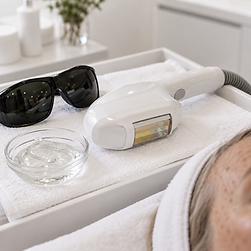
The skin is thoroughly cleansed and appropriate protective eyewear is used.
Recent sun exposure, tanning, skincare, medication and relevant medical history are taken into account before treatment.
3. I Select the Appropriate Filter and Settings
The wavelength range and treatment parameters are selected according to your skin and what I am trying to achieve.
I do not believe in treating everybody with one identical rejuvenation preset.
4. Controlled Pulses of Light Are Delivered
The DPL handpiece is placed over the treatment area and controlled pulses of filtered light are delivered into the skin.
Most people describe the sensation as a brief warm flick or elastic-band snap.
5. I Watch the Skin Response
The appearance and behaviour of the skin during treatment help guide how I proceed.
Treatment is not simply a matter of selecting a power level and repeatedly firing the machine.
6. Your Skin Is Allowed to Settle
The skin may feel warm or mildly flushed afterwards.
I will explain what response is expected and give you appropriate aftercare.
Sun protection is particularly important following any light-based treatment.
Full Face Skin Rejuvenation | £135
Single treatment: £135
3 treatments: £337.50
Normally £405. Save £67.50
Face + Neck OR Décolletage | £165
Single treatment: £165
3 treatments: £412.50
Normally £495. Save £82.50
Face + Neck + Décolletage | £195
Single treatment: £195
3 treatments: £487.50
Normally £585. Save £97.50
Pay As You Go;
Every 3rd Treatment Is Half Price
Most clinics offer their best price only when you pay for a full treatment course upfront. I do things differently. Book and pay for your treatments individually as you go. Every 3rd treatment of the same treatment area is half price, provided further treatment remains appropriate.
That means:
1st treatment: full price
2nd treatment: full price
3rd treatment: half price
If you only need one or two treatments, you simply stop there. If you need more, the saving is applied as you go, so if your treatment journey continues, your 6th treatment would also be half price.
No large upfront payment. No unnecessary course commitment. Just the same course-level saving, spread across your treatment journey.
Applies to the same treatment area and remains subject to continued treatment suitability.
IPL / DPL Skin Rejuvenation FAQs
What is IPL skin rejuvenation?
IPL skin rejuvenation, sometimes called IPL photorejuvenation or a photofacial, uses pulses of filtered light to improve some of the visible changes associated with sun exposure and skin ageing.
Rather than physically resurfacing the skin, IPL works by delivering selected wavelengths of light into the skin.
It can be particularly useful where there is a mixture of pigmentation, redness and general unevenness rather than one isolated problem.
Is DPL the same as IPL?
DPL belongs to the IPL family.
The difference with my system is that it uses multiple interchangeable filters to provide more selectively targeted wavelength ranges for different treatment goals.
I therefore describe it as DPL / IPL so that clients understand the type of technology being used without pretending it is an entirely unrelated category of device.
What does IPL skin rejuvenation improve?
It is most useful for improving the overall appearance of photoaged skin, particularly where there is a mixture of dullness, uneven tone, mild pigmentation, superficial vascular colour and early skin-quality changes.
Some clients also notice smoother-looking texture and less obvious pores.
Results vary according to what is actually creating the concern.
Does IPL tighten the skin?
I would not sell IPL as a dramatic skin-tightening treatment.
Controlled heating within the skin may contribute to dermal remodelling, and some studies have demonstrated changes in collagen and elastic tissue.
However, the evidence is not consistent enough for me to promise significant tightening.
Think improved skin quality and photoageing, not a non-surgical facelift.
Does IPL stimulate collagen?
There is evidence that IPL-induced heating can influence dermal remodelling and collagen, but studies do not all show the same magnitude of effect.
That is why I regard collagen improvement as a possible additional benefit rather than the sole reason for treatment.
If your main objective is significant collagen remodelling, deeper lines, scarring or laxity, I would usually consider fractional CO₂ instead.
Will it help fine lines?
It may improve the appearance of mild fine lines as overall skin quality improves.
However, deeper etched lines are not the main strength of IPL.
Fractional resurfacing generally makes more sense when wrinkles and texture are the dominant concern.
Will it shrink my pores?
Some clients notice that pores appear less obvious as the skin becomes smoother and more even.
However, pores cannot literally be removed or permanently closed.
I would therefore not recommend IPL solely on the promise of “getting rid of pores”.
Is IPL skin rejuvenation the same as CO₂ laser resurfacing?
No.
IPL is a non-ablative light treatment. It delivers filtered light into the skin without deliberately removing columns of surface tissue.
Fractional CO₂ laser works very differently. CO₂ at 10,600 nm is strongly absorbed by water and creates controlled microscopic columns of ablation and thermal injury.
That makes CO₂ a much stronger resurfacing treatment for texture, deeper lines, scars and more significant remodelling, but it also comes with considerably more downtime.
What if my main concern is pigmentation?
If the main problem is freckles, sun spots, age spots or obvious brown pigmentation, I would normally treat this as a dedicated pigmentation concern rather than disguising it under the vague heading of rejuvenation.
See my IPL pigmentation treatment in Norwich page for more information.
What if my main concern is facial redness?
If you mainly have persistent red cheeks, rosacea-associated vascular redness or lots of tiny superficial capillaries, my dedicated IPL redness & vascular treatment in Norwich is likely to be the more relevant treatment.
What if I only have one or two obvious thread veins?
A few individual vessels may be better suited to thermocoagulation because I can target the vessel directly rather than treating a whole field of skin with IPL.
See my thread vein removal in Norwich page for more information.
How many treatments will I need?
There is no useful single number that applies to everybody.
Some people are treating relatively mild unevenness, while others have years of accumulated photodamage across the face, neck or chest.
IPL rejuvenation is commonly performed as a series because different aspects of the skin change progressively rather than all at once.
I prefer to treat, allow the skin to settle and assess what has actually improved rather than automatically selling everybody a fixed course upfront.
How often are treatments performed?
Treatments are generally spaced several weeks apart so that the skin has time to settle and the response can be assessed properly before repeating treatment.
Does IPL skin rejuvenation hurt?
Most clients describe the sensation as a quick warm flick or elastic-band snap.
Each pulse is extremely brief and treatment is usually very manageable.
Is there downtime?
Usually very little.
The skin may look mildly red or flushed and feel warm afterwards.
If pigmentation is being targeted as part of the treatment, brown areas may temporarily become darker before gradually fading or flaking.
The exact response depends on what has been treated and how reactive your skin is.
Can I have IPL if I have a tan?
No active tan should be treated.
Melanin within a tan also absorbs light, reducing the distinction between the intended target and the surrounding skin and increasing the risk of unwanted skin reactions.
Recent sun exposure, tanning and fake tan therefore need to be discussed before treatment.
Is IPL suitable for every skin type?
No.
IPL interacts with melanin as well as vascular targets, which means skin type is important when selecting treatment and settings.
Skin with higher levels of melanin or a tendency towards post-inflammatory pigmentation requires more caution.
Suitability is assessed individually rather than assuming every skin type should be treated in exactly the same way.
Can I have treatment if I am using active skincare or medication?
Some medications and skincare products can alter skin sensitivity or how the skin responds to light.
I will ask about relevant medication, recent procedures and active skincare before treatment and advise you if anything needs to be paused or treatment postponed.
Can IPL treat suspicious brown marks?
No.
Skin rejuvenation is not a way of treating around the diagnosis of a pigmented lesion.
If a mark is new, changing, irregular, raised, repeatedly crusting or bleeding, noticeably different from your other marks or simply cannot be confidently identified as an appropriate cosmetic target, I will not treat it.
Medical assessment comes first.
How long do the results last?
Treatment can improve the visible changes that are present, but it cannot stop the ageing process or prevent future UV exposure from creating new changes.
Good daily sun protection therefore matters enormously.
Some clients choose occasional maintenance treatments once they have achieved the level of improvement they want.
Is this a good treatment before an event?
It can be a useful lower-downtime option for improving general skin clarity, but I would not book your first treatment immediately before an important event.
Skin can temporarily flush and existing pigmentation can become darker before clearing.
Allow enough time for the skin response to settle.
IPL / DPL Skin Rejuvenation Near Norwich
Alison Mary Aesthetics is a private clinic in Taverham, Norwich, offering DPL / IPL skin rejuvenation for suitable sun-damaged, dull and uneven skin.
The clinic has free private on-site parking and offers a quiet, discreet treatment setting.
Clients visit from Norwich, Taverham, Drayton, Costessey, Hellesdon, Horsford and across Norfolk for aesthetic, laser and advanced skin treatments.
Free private driveway parking is available.
Alison Mary Aesthetics Clinic
35 Broadgate
Taverham
Norwich
Norfolk
NR8 6GH
Page reviewed by Alison Mary
Aesthetic Practitioner and founder of Alison Mary Aesthetics Clinic, Norwich
Last reviewed: September 2026