


CO2 Laser Norwich | Fractional CO2 Resurfacing
From £350 | Lite, Intensive & Advanced Intensive+ Fractional Resurfacing
CO₂ fractional laser resurfacing in Norwich can improve wrinkles, acne scarring, enlarged pores, sun damage and uneven skin texture.
At Alison Mary Aesthetics in Taverham, Norwich, I offer two clearly separated levels of fractional CO₂ resurfacing:
-
CO₂ Lite: £350
-
Intensive Fractional CO₂: £850
The important thing to understand before comparing clinics, prices or somebody else's experience of CO₂ is that fractional CO₂ is not one standard procedure. How the laser is delivered changes the depth, density, tissue response, downtime and type of result we are trying to create.
So these are not two prices for the same treatment. They are different treatment intensities designed for different skin problems and different levels of recovery.

Fractional CO₂ Laser Resurfacing in Norwich: Not All CO₂ Is the Same
Saying you have had “CO₂ laser” is a little like saying you have had “surgery”. What surgery?
A small keyhole procedure? Knee surgery? Brain surgery?
The word tells you the broad category. It does not tell you what was actually done. Fractional CO₂ is similar.
Two people can both say they have had fractional CO₂ laser while having very different treatment depths, densities, coverage, downtime and healing responses. One may have had a relatively light resurfacing treatment for pores and skin texture. Another may have undergone intensive ablative fractional resurfacing for established wrinkles or acne scarring.
Both had CO₂.
They did not have equivalent treatments. That distinction is important because otherwise it is very easy to compare somebody else's results, recovery or £300 treatment with an £850 intensive treatment and assume you are comparing like with like. You often are not.
Why Can One CO₂ Laser Treatment Cost £350 and Another £850?
Because the words “fractional CO₂” do not describe one fixed dose of treatment.
A headline price does not tell you how intensively the laser is being used, how much of the face is being treated, the amount of downtime expected, whether the treatment is designed as a light course or a more substantial individual session, or how involved the recovery period will be.
This is why I offer two separate fractional treatment levels rather than one generic CO₂ appointment.
My £350 CO₂ Lite Surface Reset is the lighter resurfacing option. It is designed mainly for pores, early lines, texture, mild sun damage and general skin refinement.
My £850 Intensive Fractional CO₂ is the highest fractional level I offer and is reserved for carefully selected skin where a lite surface reset treatment is unlikely to be enough.
They all use fractional CO₂ technology but they are not interchangeable treatments with different price tags.

Why Choose Alison Mary for CO₂ Laser in Norwich?
CO₂ laser is not a bolt-on treatment for me.
Laser is one of the areas I genuinely specialise in and live and breathe.
Completing a training course teaches you how to begin using a device and I have never regarded that as the end of learning.
Since my initial laser training in early 2024, I have continued studying laser physics, tissue interaction and treatment technique almost every day, including wavelength and absorption, pulse duration, energy, density, spacing, treatment depth, thermal injury, wound healing and complications.
And I still do not believe there is a point where you simply know everything there is to know.
The more I learn about laser, the more obvious it becomes that the machine itself is only one part of the treatment. What matters is understanding what the settings are doing to the tissue, why you are choosing them and what biological response you are trying to create.
That knowledge changes how I treat. I am not simply selecting a preset or repeating the same settings on every face. I am assessing the skin, the indication, the treatment endpoint and the response I am seeing in front of me, then adapting accordingly.
I also deliberately keep my treatment menu focused. I would rather specialise in a smaller number of treatments, study them deeply and continue improving than offer every treatment available and only understand each one superficially.
And with ablative laser, the treatment does not finish when the machine is switched off... wound healing, aftercare, complication prevention and recognising when recovery is not following the expected course are part of performing CO₂ properly too.
A laser certificate tells you somebody has completed training. It does not tell you how deeply they have continued studying the subject afterwards.
Compare My CO₂ Fractional Laser Treatment Levels
There is no prize for choosing the strongest treatment. The correct treatment is the level that appropriately matches your skin, the problem we are trying to improve, the result you want and the recovery you are prepared to accept.
CO₂ Lite Surface Reset | £350
Intensive Fractional Ablative CO₂ | £850
BEST IF: your skin is already in reasonably good condition and you mainly want to improve and refine it
This is my lighter fractional resurfacing option and is best suited to:
-
enlarged pores
-
rough or dull texture
-
early fine lines
-
mild sun damage
-
general skin quality
-
skin that needs refinement rather than major correction
Think of Lite as a surface polish with genuine collagen stimulation.
It can make already-decent skin look fresher, smoother and more refined, but if you have established wrinkles or significant texture, Lite is unlikely to be enough.
Visible recovery is usually around 3 to 5 days.
BEST IF: you have visible wrinkles, texture, scarring or more significant skin damage that actually needs correcting.
Intensive is my strongest fractional resurfacing treatment and is designed for skin where there is considerably more to improve.
A stronger, more intensive treatment can create a greater tissue response, but it can also increase recovery burden and complication risk.
The objective is therefore not maximum energy.
The objective is the correct biological endpoint for the problem being treated.
If you have established wrinkling or textural damage, this is usually where Lite simply will not cut it.
Visible recovery is usually around 7 to 10 days.
My Skin Is Already Good. Can I Still Have Intensive?
When Fractional CO₂ Is Not Enough
Yes, but I will be honest about whether I think you will actually see £850 worth of difference.
If your baseline skin is already smooth, relatively wrinkle-free and in good condition, Intensive can still give you a beautiful overall upgrade and greater collagen stimulation than Lite.
What it cannot do is dramatically correct problems that were never there in the first place.
So the visible before-and-after difference is naturally likely to be smaller than it would be in somebody with wrinkles or significant texture.
In that situation, Intensive becomes partly an investment in your future skin and collagen, rather than something I would sell you on the promise of a dramatic visible transformation now.
I am perfectly happy to treat good skin intensively, but I would rather you understood that before spending £850 and expecting more.
There is also a point where skin can require more correction than fractional resurfacing can realistically provide.
Very advanced wrinkling, laxity or textural damage can still be improved with fractional CO₂, but there may be a limit to what I can honestly promise within the fractional field.
At that point, full-field ablative resurfacing may be more appropriate.
Full-field CO₂ removes or ablates the surface much more continuously than fractional treatment and comes with a significantly greater recovery, risk profile and cost. It requires proper consideration.
I do not offer full-field resurfacing at Alison Mary Aesthetics, but if I genuinely think you would be better served by it, I would rather tell you that and recommend an appropriate clinic than sell you a treatment that cannot realistically deliver the level of correction you want.

Find Your Perfect CO₂ Treatment Level
Not sure whether your skin sounds more like Lite or Intensive?
Use the quick treatment guide below as a starting point.
It cannot replace assessment, but it should help you understand where your concerns are likely to sit on the fractional CO₂ spectrum.
What Can CO₂ Fractional Laser Improve?
Fractional CO₂ resurfacing can be used to improve:
-
fine lines and deeper etched wrinkles
-
acne scarring
-
rough or uneven skin texture
-
enlarged pores
-
sun-damaged and weathered skin
-
crepey skin around the eyes
-
lines around the mouth
-
uneven surface pigmentation
-
general deterioration in skin quality
CO₂ is particularly useful where the problem lies within the quality and architecture of the skin itself.
Nothing is being added to the face. The improvement comes from controlled tissue injury followed by repair, resurfacing and remodelling.
The appropriate treatment level depends on the problem being treated; client whose main concern is pores and early texture does not automatically need the same protocol as somebody with established atrophic acne scarring or deeply etched wrinkles.
CO₂ Laser for Acne Scars in Norwich
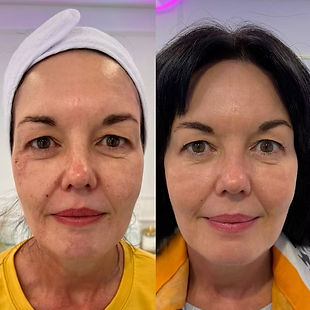
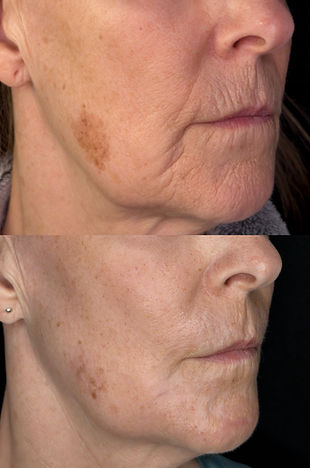
Acne scarring is one of the most established indications for ablative fractional CO₂ resurfacing.
Atrophic acne scars involve structural changes within the skin rather than a simple surface blemish, which is why meaningful improvement may require treatment beyond a light cosmetic refresh.
Fractional CO₂ creates microscopic zones of ablation and thermal injury within the scarred skin, initiating a wound-healing and remodelling response.
The objective is not to promise completely scar-free skin, the aim is to improve scar depth, texture and the transition between scarred and surrounding skin so that the surface becomes more even.
Different acne-scar types behave differently, and some complex cases are better treated using more than one modality. If I believe CO₂ alone is unlikely to produce the result you want, I will tell you.
Before and After Fractional CO₂ Laser in Norwich




How CO₂ Actually Works - The Science

CO₂ laser works by using a wavelength of light (10,600nm) that is naturally drawn to the water in your skin. Because skin contains a lot of water, the laser can target it very precisely, removing damaged surface tissue while also delivering controlled heat beneath the surface.
That combination is what makes CO₂ so effective. It does not just polish the skin, it also triggers a deeper repair response.
That deeper heat is important because it helps tighten existing collagen and stimulate fresh collagen production as the skin heals. In other words, the treatment is doing two things at once: resurfacing the outer layer and encouraging the skin underneath to rebuild itself in a smoother, firmer way.
When CO₂ is used in fractional mode, it treats the skin in tiny microscopic columns rather than removing the entire surface in one go. This means some skin is left untouched between each treated point, which helps healing happen faster and more safely than with full-field resurfacing.
That is why fractional CO₂ can still be very powerful, while remaining more manageable in recovery.
The intensity of the treatment is what changes the result. A lighter fractional treatment works more on texture, pores, brightness and general skin refresh.
A stronger, high-intensity fractional treatment reaches deeper and treats a greater percentage of the skin, which is why it can tackle more advanced concerns such as acne scarring, etched wrinkles and heavier textural ageing.


This is why treatment choice matters so much. Not all CO₂ is doing the same job. Some treatments are designed to refresh the surface. Others are designed to create a much more significant structural rebuild. Understanding that difference is what allows Alison to match the treatment properly to your skin, your goals, and the level of result you actually need.
What Recovery Really Looks Like; Pre and Post Treatment Care
Recovery depends entirely on the treatment level chosen.
CO₂ Lite Surface Reset:
Intensive Fractional CO₂
This is the lighter fractional option, so downtime is shorter and healing is more manageable.
You can expect:
-
redness
-
dryness
-
bronzing
-
light peeling or shedding
Most clients experience around 4 to 7 days of visible recovery.
These are much stronger resurfacing treatments, so the healing response is more obvious.
You can expect:
-
redness
-
swelling
-
heat
-
bronzing
-
crusting
-
peeling
-
weeping or oozing in the early phase
This usually means genuine indoor recovery time, not just a little redness you can hide with makeup.
For stronger full-face treatments, you should realistically expect to be housebound during the early part of recovery. That is not a flaw in the treatment. That is part of what makes deeper resurfacing capable of producing stronger results.
If a clinic is promising powerful resurfacing with no real downtime, they are almost certainly not delivering resurfacing at the level many clients think they are buying.
Intensive Fractional CO₂ Laser Aftercare | Norwich
For intensive resurfacing, aftercare is not a generic leaflet handed over as you leave.
Ablative fractional CO₂ deliberately creates a significant wound-healing response. That recovery period needs to be managed properly.
At Alison Mary Aesthetics Clinic:
-
You receive detailed written aftercare
-
Stronger treatments are monitored during the early healing phase
-
Morning photographs may be requested so I can see how the skin is progressing
-
Any changes needed during recovery can be guided directly
-
Intensive full-face clients receive a carefully selected post-laser recovery kit

Every product in my aftercare kit (pictured above) has been carefully selected to support the skin through the early healing period, minimise unnecessary irritation and protect the recovering skin barrier. The protocol is based on what we know from published research about wound healing and skin-barrier recovery, alongside my own clinical experience treating and following clients through the healing process.
For me, the recovery phase is an important part of the treatment itself and can have a significant influence on how well the skin heals and how good the final result looks.
You will be given everything you need to take you from day 0 right through to week 8.
I would much rather know exactly what your skin is being exposed to during those first important days than perform a highly intensive resurfacing treatment and then leave you to work the aftercare out for yourself until your follow-up.
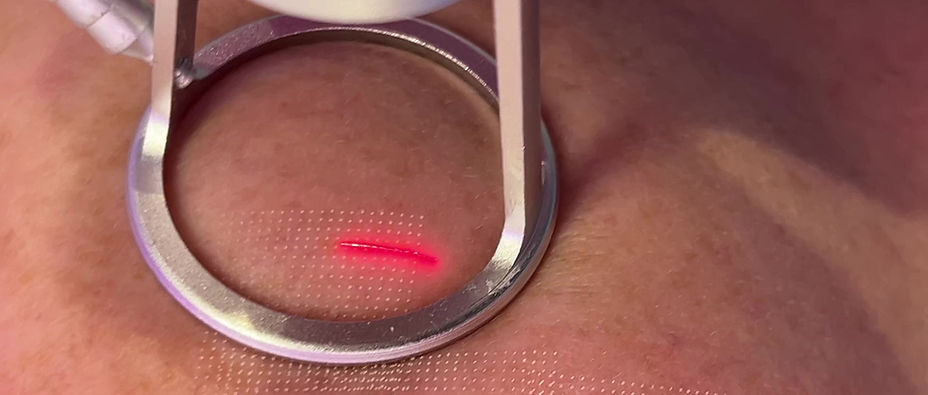
Your Step-by-Step Treatment Journey:
Consultation & Assessment
1
Your skin, goals, downtime tolerance, and medical history are assessed first. This is where the correct level is confirmed, whether that is CO₂ Lite Surface Reset or Intensive Ablative Fractional CO₂.
2
Anaesthesia
A strong topical anaesthetic is applied under occlusion, alongside injectable local anaesthetic where appropriate. During treatment, Zimmer cryo-cooling is used to improve comfort. If suitable, oral pain relief may also be taken on arrival.
You must arrive with completely bare skin, with no makeup, moisturiser, or SPF applied.
Treatment
3
The laser is delivered in a controlled fractional pattern, zone by zone. Sensations vary depending on the intensity being used, but most clients describe the feeling as heat, tingling, or a strong prickling sensation rather than sharp pain.
Treatment time varies depending on the area and the level being performed.
4
Immediately Post-Procedure
The skin will feel hot or warm and look red. With stronger treatments, swelling and some weeping or oozing can occur in the early phase of healing. This is expected and is part of the resurfacing process.
Full aftercare guidance is provided, along with ongoing support during the healing phase.
Results Timeline
5
Initial visible improvement is usually seen once the skin has healed, typically from around 10 to 14 days depending on the treatment level. However, the deeper improvements continue gradually over the following 3 to 6 months as collagen and elastin remodelling progresses.
This is why CO₂ gives both an early visible refresh and a longer-term structural improvement.
To reduce complications and improve healing:
-
4 weeks before: avoid sun exposure, sunbeds, and fake tan
-
2 weeks before: stop retinoids, acids, exfoliants, and vitamin C on the treatment area
-
Avoid: waxing, threading, or laser hair removal on the area close to treatment
-
Do not: attend with active infection, dermatitis flare, sunburn, broken skin, or irritation
-
Arrive with: clean, dry skin and no products applied
-
If you are prone to cold sores: preventative medication is mandatory. These can be arranged by an online pharmacy service here.
-
Strictly no: contact lenses or lash extensions for eye-area treatments
If there is any doubt, it is always better to reschedule than treat through irritation.
Intensive ablative fractional resurfacing follows a predictable biological healing sequence.
Days 1 to 3: Redness, swelling, warmth, and possible weeping or oozing as the skin begins its wound-healing response.
Days 3 to 10: Bronzing, crusting, and peeling as damaged surface layers shed and new epidermis forms.
Days 10 to 14: The skin often starts to look smoother and more refined once crusting has resolved.
Weeks 3 to 8: Residual pinkness gradually fades while the barrier continues strengthening.
Months 3 to 6: Collagen remodelling continues beneath the surface, improving texture, firmness, and overall skin quality. This is also the ideal stage for final results photography.
Eye treatments: Strong peri-orbital resurfacing can cause noticeable swelling for the first few days, sometimes with the eyes appearing partially closed. This is common and usually settles quickly.
FULL FACE
CO₂ Lite Surface Reset | £350
A lighter full-face fractional resurfacing treatment for pores, early lines, texture, mild sun damage and general skin refinement.
Designed for lower downtime and progressive resurfacing rather than intensive scar or wrinkle correction.
Intensive Ablative Fractional CO₂ | £850
⚠️ Maximum-intensity fractional protocol offered at Alison Mary Aesthetics.
Reserved for selected clients with more established wrinkles, scarring and textural damage where standard Intensive treatment is unlikely to provide enough resurfacing.
This sits at the upper end of the fractional CO₂ spectrum I offer, while remaining fractional rather than full-field ablation.
It is not simply a more expensive version of the same treatment. It is a different treatment intensity, with greater tissue response, downtime and aftercare requirements.
FOCUSED AREAS
Full Eye Area | £495
Upper and lower lids, mobile lid and crow's feet.
⚠️ Highest-intensity fractional eye-area protocol I offer.
Metal ocular shields are used where required for treatment around the eye.
Under-Eye Area Only | £395
⚠️ High-intensity fractional resurfacing for the under-eye area, selected according to skin quality, laxity and suitability.
Full Lip, Barcode & Perioral Resurfacing | £495
⚠️ High-intensity fractional resurfacing for the lip and perioral area, designed for more established lines and textural ageing.
BODY AREAS
Neck | £275
Stomach | £275


CO₂ Laser in Taverham, Norwich & Norfolk
Alison Mary Aesthetics is a private clinic in Taverham, Norwich, NR8, approximately 15 minutes from Norwich city centre.
Clients visit from Norwich and across Norfolk, including Taverham, Drayton, Costessey, Hellesdon, Horsford, Thorpe St Andrew and Wymondham.
Free private driveway parking is available.
Alison Mary Aesthetics Clinic
35 Broadgate
Taverham
Norwich
Norfolk
NR8 6GH
CO₂ Laser FAQs
How much does CO₂ laser cost in Norwich?
Full-face CO₂ Lite is £350 and Intensive Fractional CO₂ is £850
Those prices represent different fractional treatment intensities rather than three prices for the same standard treatment.
What is the difference between light and intensive fractional CO₂?
Light fractional CO₂ is primarily designed for pores, surface texture, early lines and general skin refinement.
Intensive fractional CO₂ creates a substantially greater ablative and thermal injury for more established wrinkles, acne scarring and textural damage. Both treatments are fractional CO₂ and they are not equivalent treatments.
How much downtime does CO₂ laser have?
CO₂ Lite generally produces around 3 to 5 days of visible recovery.
Intensive resurfacing generally involves around 7 to 14 days of more obvious healing, including several early days where staying at home may be realistic.
Individual recovery varies.
How many CO₂ laser sessions will I need?
It depends on the treatment level and the concern being treated.
CO₂ Lite is often approached progressively in sessions, particularly when the goal is general refinement.
Intensive treatments are usually performed as a substantial individual session that will generally last you 2-4yrs.
Further treatment is based on the response rather than assuming everybody needs a predetermined course.
Is CO₂ laser good for acne scars?
Ablative fractional CO₂ is an established treatment option for atrophic acne scarring.
Results depend on scar type, treatment intensity and individual healing, and some complex scarring may benefit from additional treatment methods rather than CO₂ alone.
Does CO₂ laser hurt?
CO₂ is not completely pain-free, particularly at intensive settings.
Strong topical anaesthetic along with Zimmer cold-air cooling are used to make treatment substantially more manageable, with additional local anaesthesia where appropriate.
Is stronger CO₂ always better?
No.
More intensive treatment can create a greater tissue response, but increasing treatment intensity can also increase downtime and adverse effects.
The correct protocol is therefore the one that appropriately matches the skin and the problem being treated, not simply the strongest treatment available.
Is your strongest fractional CO₂ the same as full-field CO₂?
No. Intensive is still a fractional treatment.
Full-field ablative resurfacing creates a substantially more continuous surface injury and has a different recovery and risk profile.
My Intensive treatment sits at the highest end of the fractional resurfacing I offer.
Ready to Discuss CO₂ Laser Resurfacing?
If you are comparing CO₂ treatments, do not start by asking which clinic has the cheapest “CO₂”.
Start by asking:
What level of fractional CO₂ am I actually having?
Once you understand that, the differences in price, downtime and expected outcome become much easier to compare properly.
At your appointment, I will assess your skin and explain whether CO₂ Lite or Intensive is the most appropriate level for what you actually want to improve.